Staking for Governance: How Locking Tokens Gives You Voting Power
Picture two token holders: one just holds their coins in a wallet, the other stakes them. Only one gets a real say in what happens next. Here’s how staking for governance voting power actually turns a passive holding into an active vote.

This article explains the basic mechanic, the main models for turning stake into voting power, and what to weigh before locking tokens for governance.
Governance Token Staking: The Basic Mechanic
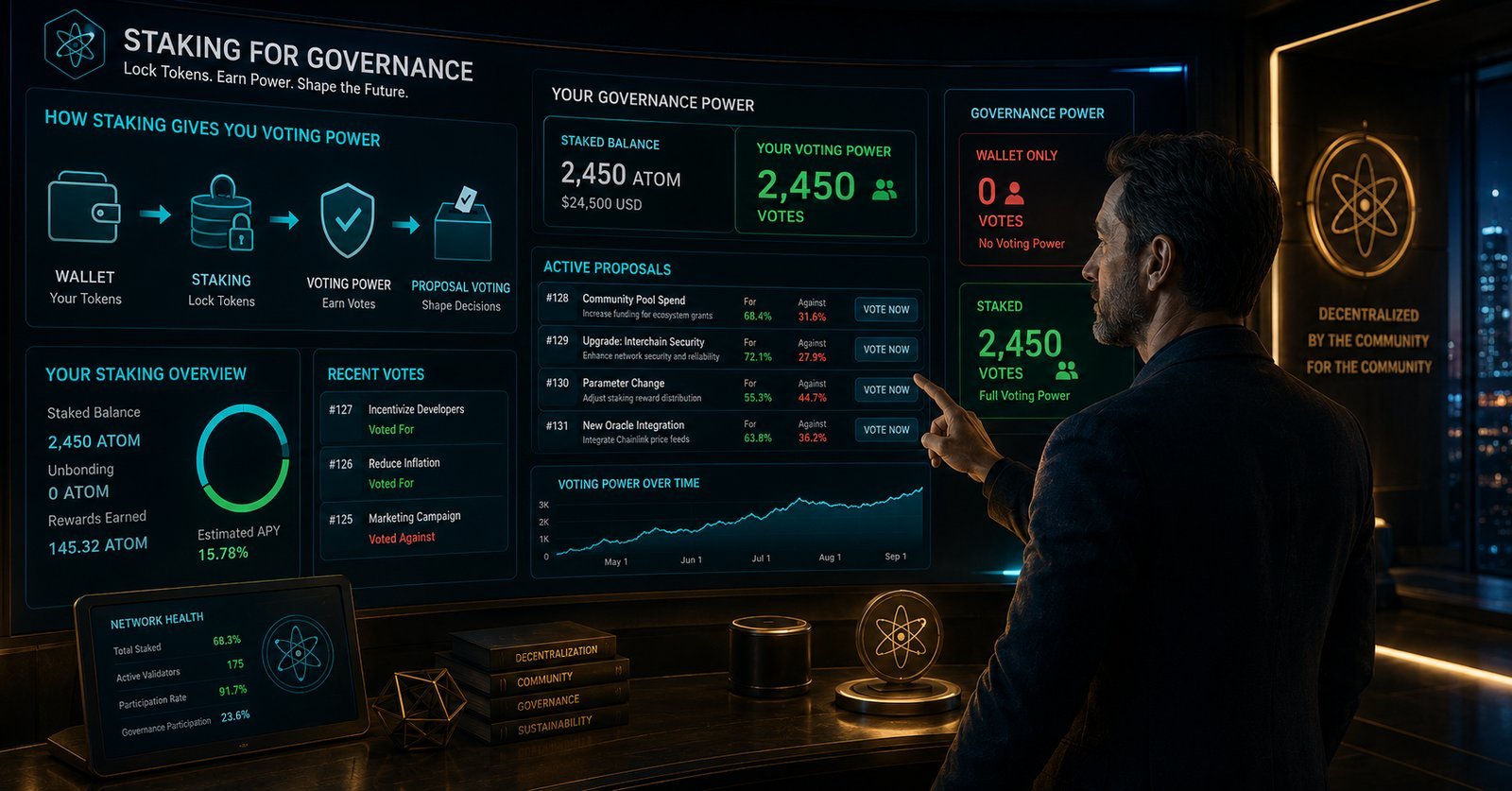
Many blockchains tie voting rights directly to staked tokens, not just tokens sitting in a wallet. In the Cosmos SDK’s governance module, only bonded (staked) token holders can vote on proposals, and voting power scales with how many tokens are staked. Documentation from Cosmos SDK’s official governance module docs confirms this bonded-token requirement directly. Unstaked tokens simply don’t count toward a vote.
How to Turn Staked Tokens Into Voting Power
Getting governance rights from staking usually follows a similar pattern across networks, though the mechanics vary by protocol.
Direct Staking Models
On networks like the Cosmos Hub, you delegate tokens to a validator, and your voting power follows your staked balance. If you skip a vote, your validator’s vote applies to your stake by default.
Locked, or “Vote-Escrowed,” Models
Other protocols require locking tokens for a fixed period to receive a separate voting-power token. Locking for longer periods increases voting weight, rewarding long-term commitment over short-term speculation.
Vote-Escrowed Tokens: A Long-Term Governance Example
Curve Finance’s veCRV model is a widely cited example of vote-escrowed tokens. Users lock CRV for up to four years, and longer locks produce proportionally more voting power, according to CoinGecko’s overview of governance token mechanisms. This design ties influence to conviction — the longer you’re willing to lock tokens, the more say you get in how the protocol evolves.
| Model | Voting Basis | Lock Requirement |
|---|---|---|
| Cosmos Hub (bonded staking) | 1 token = 1 vote | Tokens must remain staked |
| Curve veCRV (vote-escrow) | Time-weighted | Up to 4-year lock |
| Direct wallet voting | 1 token = 1 vote | No lock required |
Mechanics vary by protocol and can change with governance upgrades — always check current network documentation before staking.
Risk Note: Locked or bonded tokens are typically illiquid until unstaked or the lock expires, and some networks apply slashing penalties for validator misbehavior. Understand a protocol’s unbonding period and lock terms before committing tokens to governance.
Key Takeaway: Whether it’s bonded staking or a multi-year vote-escrow lock, the underlying trade is the same: commit your tokens for a period of time in exchange for a real say in the protocol’s decisions.
Conclusion: Staking Turns Holding Into Having a Voice
Staking for governance voting power rewards commitment: the tokens you lock up are what earn you a vote on the network’s future. Whether it’s bonded staking on Cosmos or a multi-year veCRV lock, the pattern is the same — stake, then steer.