Exchange Staking vs. Hardware Wallet Staking: Security Trade-Offs
Where you stake matters as much as how much you stake. Here’s how exchange staking and hardware wallet staking compare on security, control, and rewards.
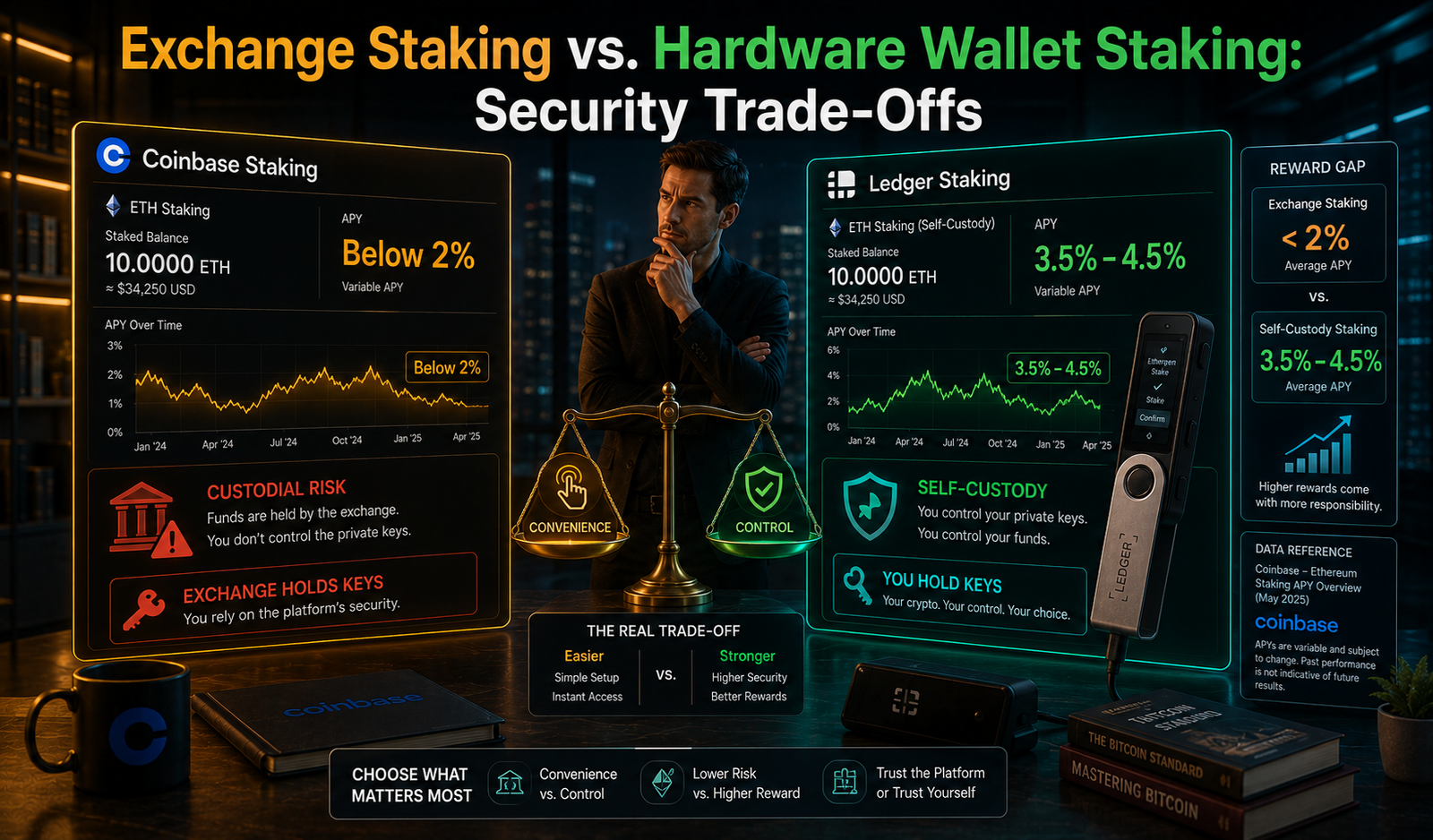
Staking your crypto can earn you steady rewards, but where you stake matters as much as how much you stake. Crypto staking security comes down to a simple trade-off: convenience versus control. This article breaks down both paths so you can choose with clear eyes.
Exchange Staking: Convenience With Custodial Risk
Exchange staking means handing your coins to a platform like Coinbase or Binance, which stakes them on your behalf. It’s fast and beginner-friendly, but you don’t hold your private keys — the exchange does. If the platform fails or gets hacked, your funds are at risk, as past exchange collapses have shown. This is often called counterparty risk: your rewards depend on the platform staying solvent and secure.
When you stake through an exchange, you don’t control the private keys to your coins. If the platform becomes insolvent or is compromised, recovering your funds may not be guaranteed.
Hardware Wallet Staking: More Control, More Responsibility
Staking directly from a hardware wallet keeps your private keys offline and under your control. You connect the device to a staking interface, delegate your coins to a validator, and rewards accrue while your keys never leave the hardware.
The Setup Trade-Off
Hardware wallet staking takes more technical steps than clicking “stake” on an exchange, and mistakes like losing your recovery phrase can be costly. You’re also responsible for choosing a reliable validator, since a poorly run one can miss rewards or face penalties.
The Reward Trade-Off
Yields differ too. Solo or self-custodied staking typically nets higher rewards than exchange staking, since exchanges take a cut for managing the process on your behalf. That gap can add up meaningfully over a multi-year holding period.
Comparing Rewards: A Real Staking Reward Example
According to Coinbase’s own Ethereum staking data, exchange-based reward rates have recently sat below 2% APY. Self-custodied and solo staking setups have historically delivered noticeably higher yields, often in the 3.5% to 4.5% range, since there’s no platform fee cutting into rewards.
| Staking Method | Typical APY Range | Who Holds the Keys |
|---|---|---|
| Exchange staking | Below 2% | The exchange |
| Hardware wallet staking | 3.5% – 4.5% | You |
This is a core part of any hardware wallet staking strategy: weighing a lower, hands-off yield against a higher return that requires managing your own keys and validator choice.
Conclusion
Neither approach is universally “safer” — crypto staking security depends on your comfort with self-custody versus convenience. Exchange staking suits hands-off beginners; hardware wallets suit those who prioritize control.