Vote-Escrowed Tokens (veTokens) Explained: Staking Meets Governance
Vote-escrowed tokens (veTokens) explained: learn how locking tokens boosts voting power and rewards. See veCRV, veBAL examples and governance mechanics.
Read More →Staking strategies, rewards guides and crypto investing guides.

Vote-escrowed tokens (veTokens) explained: learn how locking tokens boosts voting power and rewards. See veCRV, veBAL examples and governance mechanics.
Read More →

DAO treasury staking explained: learn how decentralized organizations earn passive yield by staking treasury assets, plus governance rules and risk trade-offs.
Read More →
Staking for governance: learn how locking tokens gives you voting power. Compare bonded staking, vote-escrowed models, and real token governance examples.
Read More →
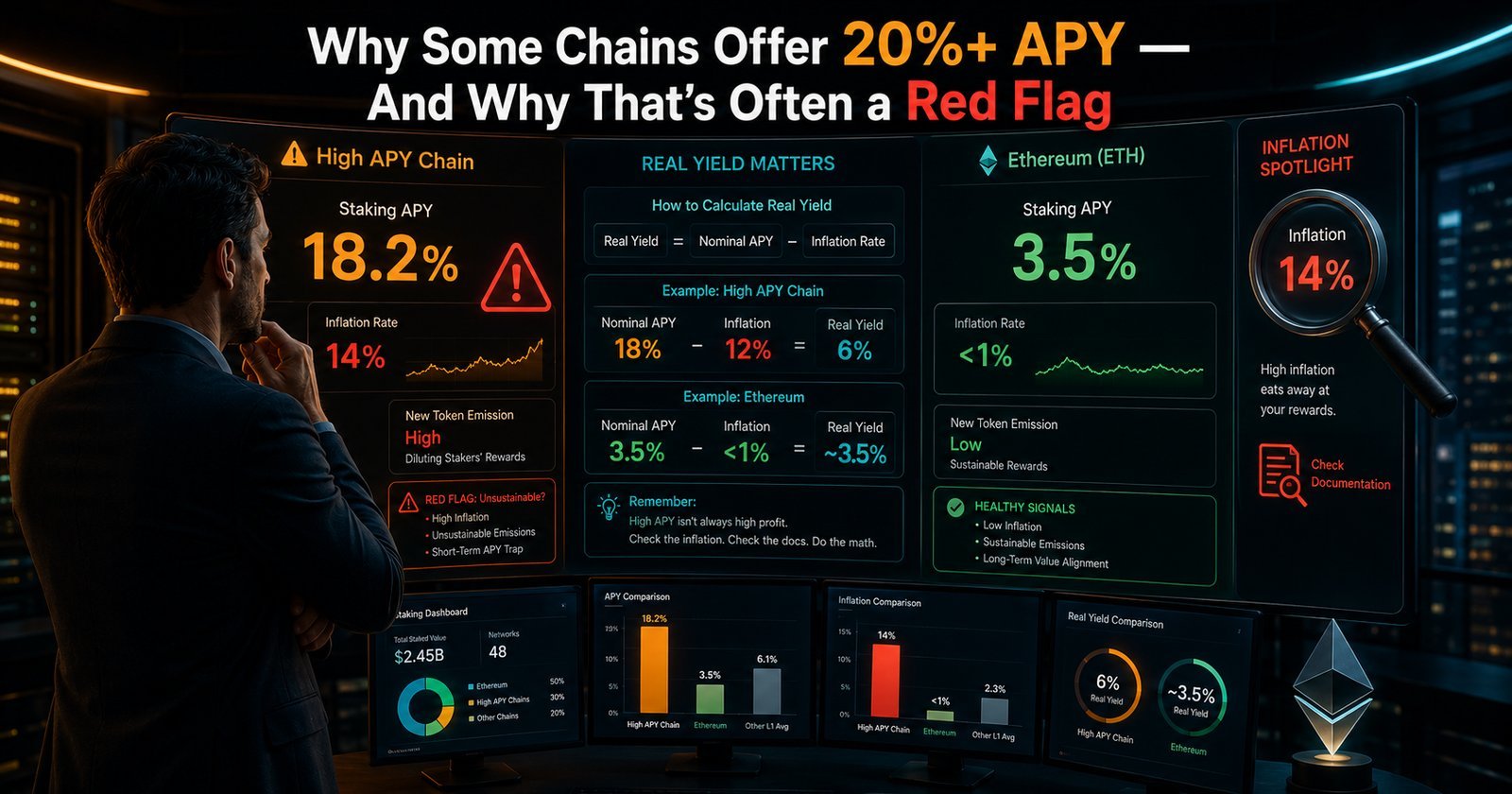
Why do some chains offer 20%+ APY? Learn why high staking APY is often a red flag, how inflation eats returns, and how to spot real yield before you stake.
Read More →
Staking rewards vs lending yield: which passive income is safer? Compare how staking and lending work, their risks, returns, and withdrawal and lock-up terms.
Read More →
Learn how to model long-term staking growth with reinvestment assumptions. Understand compounding frequency, APY estimates, and a 5-year growth example.
Read More →
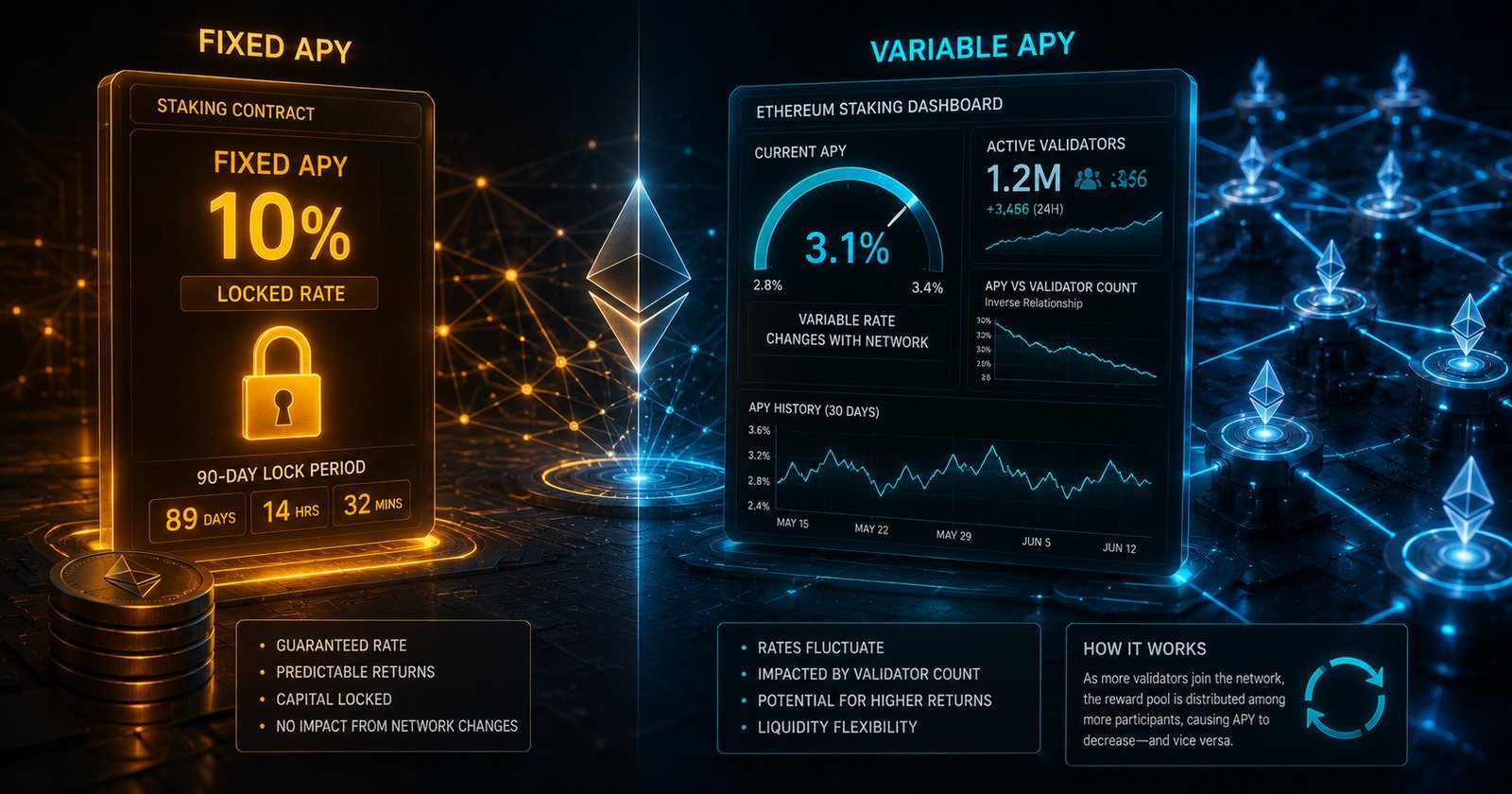
Fixed vs variable staking APY: understand rate fluctuations. Learn what drives each rate type, see an Ethereum example, and plan around moving APY today.
Read More →
Staking arbitrage means chasing the best APY across chains. Learn why APY varies by chain, hidden costs like fees and lockups, and when switching pays off.
Read More →
Network inflation schedules can quietly erase staking rewards. Learn the difference between nominal APY and real yield, and how to calculate your real return.
Read More →